Someone who thinks by arguing with himself.
On paper: a director and producer from Taipei. Fifteen years, two hundred-plus commercials and music videos — most of them produced end to end by my own studio — for NIKE, Netflix, 7-ELEVEN, and Warner, Sony, and Universal Music. Then four years of building startups. The two halves make more sense together than they sound.
Eight.


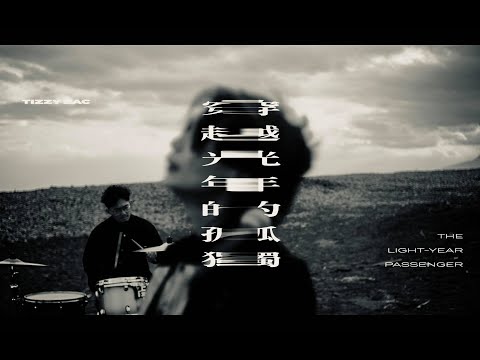
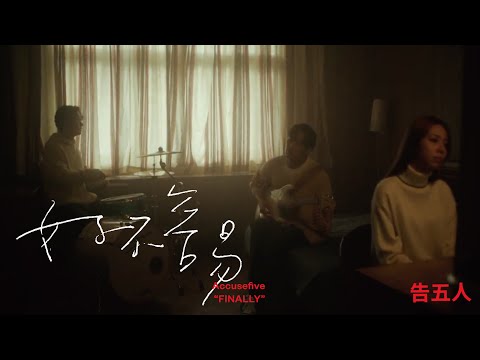
Most of them were fireworks — designed carefully, launched on time, gone by morning. I don't say that with regret. A good firework has value: it just doesn't ask to be remembered. For scale: sixteen of my music videos have crossed a million views, five have crossed ten million. Some even refuse to go out — in 2019 we made Uber Eats' first Taiwan campaign, "Tonight I'll be eating…", on two weeks of cross-border prep, and its line is still how people here order dinner. But the eight above survived for a different reason: each caught something true that didn't expire with the media plan. The rest live on Vimeo, if you'd like to see the fireworks anyway.
That's my whole theory of curation, by the way. You're reading it.
Because the most important part often happens before the answer — I call it the first beat. The pause. The hesitation. The moment someone stops performing and starts thinking. I learned to protect that moment — not to rush it, polish it away, or cut different people into one convenient message.
I have remembered that answer for more than a decade. Two thousand interviews taught me that people know when you are extracting a quote. They also know when you are trying to understand them. There is no technique that can fake the difference.
Every few years I ask myself the same question: is this as good as it gets? At the production company, I looked at my seniors and the answer was no — so I became a director. Ten years and a good living later, I asked again — and went to build startups.
I co-founded Morpho, a donor-led giving platform — donors posted what they wanted to support, and people applied, so no one had to perform their hardship to be helped. It served real people and then failed on unit economics, partly because I refused to make generosity a rich person's product. The decision I'm proudest of is the one that killed it. Later I became a founding member of The Weekend Club — weekend brunches with strangers, no profiles, no swiping. An AI decides who sits together — and much of its logic began as things I noticed at the tables and taught the engineers, without writing a line of code. In our home market, nine in ten guests say they'd recommend it. It grew from a Google Form to forty thousand members across Taiwan, the US, the UK, and Singapore.
Film taught me to find the story. Startups taught me what it costs to be wrong.
For a year. Three hundred strangers, and one accidental experiment: when I let people choose their own final shots, they picked photos my professional eye would have rejected — and loved them. How you think you look and how the world reads you are two different pictures. That finding is why The Weekend Club has no profile photos at all: the photographer who sold better profiles built a product without them.
Fair. Here's what actually happened: this February I took on a pitch for Acer's 50th-anniversary film, with a timeline tight enough to force a different process. I didn't ask Claude to write it. I built a debate room: threads for strategy, creative, pitch, and review, kept apart, then made to challenge each other. What survived was sharper than anything I started with. We won.
For most of my career, asking "can this be better?" eventually hit a ceiling — budget, market, compromise. AI is the only craft I've found where that question is the engine, not the ceiling. For the first time, my favorite question has somewhere to go.
Good question. Don't take my word for any of this:
The same thing I ask of everyone else: a real answer.
I'm looking for it in the Bay Area.
Currently in Taipei, relocating to the Bay Area in 2026. If this sounds like the kind of person your team needs, write me.